Islamabad metro bus guide: Red, Orange, Green and Blue lines explained
How the Rawalpindi–Islamabad metro network works: where each line goes, how to pay, the electric feeder buses, and tips for a first ride.
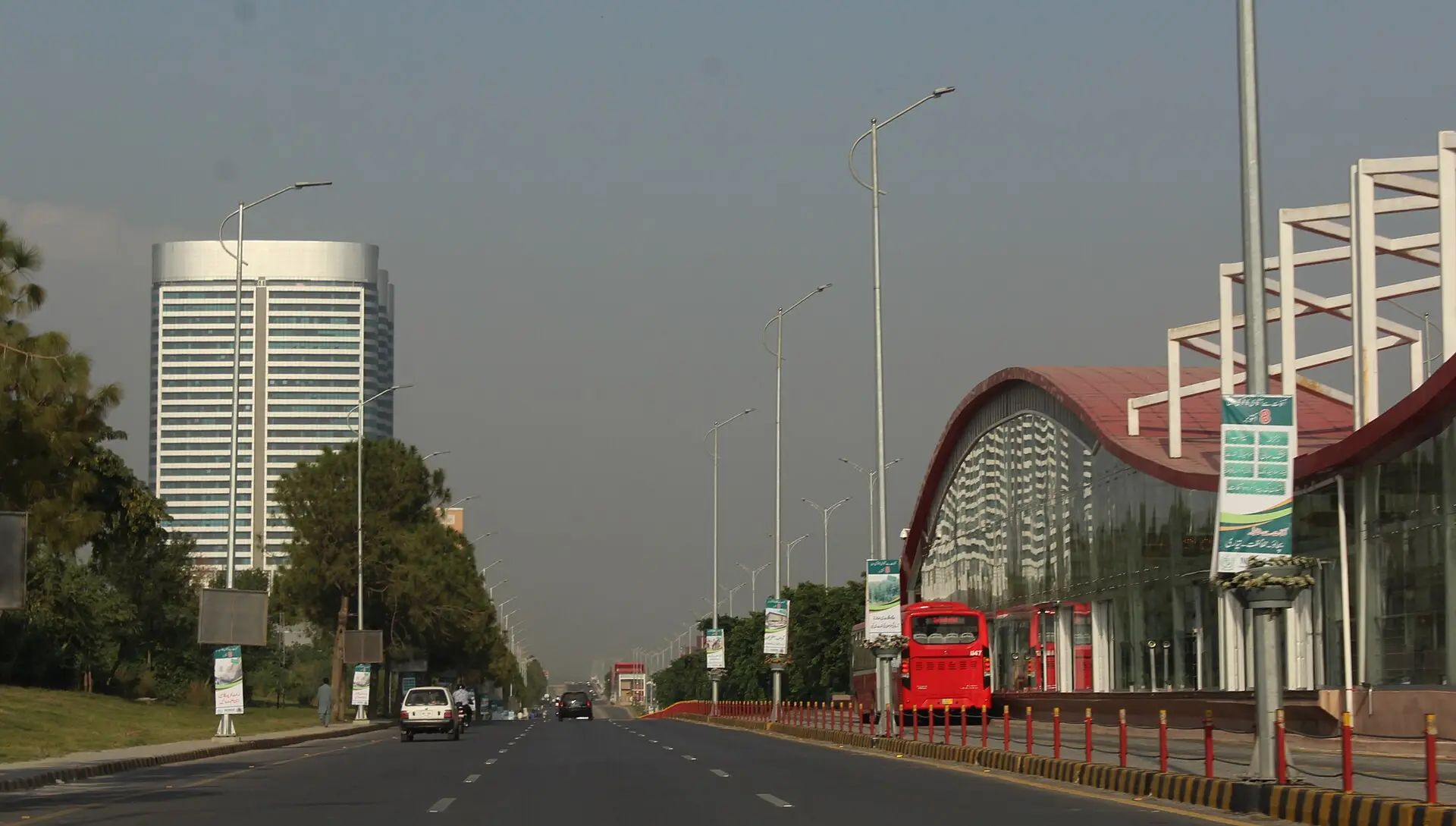 Photo: Drsaeed90, CC BY-SA 4.0
The Rawalpindi–Islamabad metro bus is the fastest way to cross the twin cities without a car. Buses run on their own dedicated lanes for much of the route, so they skip the worst of the traffic, and stations are clean, air-cooled and well signposted. Since the first line opened in 2015, the network has grown to four main lines, plus a fleet of electric feeder buses that reach sectors the metro does not.
This guide explains each line, how to pay, and how to use the system for everyday trips.
Fares and timings change. We give the general picture below. Always check the current fare at the station or on official notices from the Capital Development Authority (CDA) and the Punjab Mass Transit Authority before you travel.
The four main lines
Red Line: Rawalpindi to the Pak Secretariat
The original line, opened in June 2015. It runs from Saddar in Rawalpindi, along an elevated track above Murree Road, through Faizabad, and then down Jinnah Avenue through the Blue Area to the Pak Secretariat next to Constitution Avenue.
Use it for: commuting between Rawalpindi and Islamabad, getting to the Blue Area’s offices and restaurants, and reaching the government district.
Orange Line: to Islamabad International Airport
Opened in 2022, the Orange Line runs from Peshawar Morr (near G-9 and H-9) along the Srinagar Highway to Islamabad International Airport, about 25 km away. The airport station is a short walk from the terminal.
Use it for: getting to and from the airport cheaply. See our airport to city guide.
Green Line: towards Bhara Kahu
Launched in 2022, the Green Line runs from the Pak Secretariat area east along the Murree Road side of the city towards Bhara Kahu.
Use it for: reaching areas such as Bari Imam and Bhara Kahu, and the eastern side of the city.
Blue Line: along the Islamabad Expressway
Also launched in 2022, the Blue Line runs from the Pak Secretariat area south-east along the Islamabad Expressway towards Gulberg and the Koral area.
Use it for: the busy Expressway corridor and the housing areas along it. See Expressway traffic.
Unlike the Red and Orange Lines, the Green and Blue Lines mostly run in mixed traffic, so journey times vary more at rush hour.
Electric feeder buses
Since 2023, the CDA has run electric buses on feeder routes that link sectors, hospitals and markets to the main metro lines. Routes cover destinations such as PIMS, Saidpur, Bari Imam, Golra and Daman-e-Koh, among others. Reports in June 2025 said the electric-bus fare was raised to Rs100 per ride. Live routes and stops can be found in Google Maps by switching to public transport directions.
How to pay
- Metro card: the easiest option for regular riders. Buy and top it up at station counters, then tap in at the gates.
- Single-journey tokens or tickets: available at station counters for occasional trips.
- Keep small notes for the counter, as change is not always available.
Payment methods and fares differ between lines and operators, so if you plan to use several lines, ask at the counter which card works where.
Riding tips
- Avoid the rush hours (roughly 8–10am and 4–7pm on weekdays) if you can. Red Line buses through the Blue Area get very full.
- Women’s section: buses have a section reserved for women, usually at the front.
- Stand behind the line on platforms; doors open automatically.
- Carry ID. Security staff may check bags at some stations.
- Check for suspensions. Service is sometimes halted during major security events in the capital, such as international summits or large protests. Our traffic page carries alerts.
- Plan the last mile. Metro stations are on main avenues, so for homes inside sectors you may need a short ride-hailing trip.
Useful journeys
| Trip | How |
|---|---|
| Rawalpindi Saddar to the Blue Area | Red Line, direct |
| Blue Area to the airport | Red Line to the Peshawar Morr (Kashmir Highway) interchange, then Orange Line |
| Blue Area to Faisal Mosque | Metro to the nearest Jinnah Avenue stop, then ride-hailing |
| To Saidpur Village or Daman-e-Koh | Electric feeder bus where available, or ride-hailing |
Accessibility
On the Red and Orange Lines, buses stop level with the platform, which makes boarding easier. Many stations, especially the elevated ones, involve stairs or escalators, and lifts are not always available or working. Feeder buses that stop at the roadside can be harder for wheelchair users. Ask station staff for help, and allow extra time.
Getting around without the metro
For most of Islamabad, ride-hailing apps remain the most convenient option, especially at night and for trips inside sectors. Taxis are available at the airport and major hotels. See our transport page and our guide to how Islamabad’s sectors work to understand addresses.