Islamabad weather by month, and the best time to visit
Hot summers, a wet monsoon, crisp autumns and cold winter nights. A month-by-month guide to Islamabad's climate and what to pack.
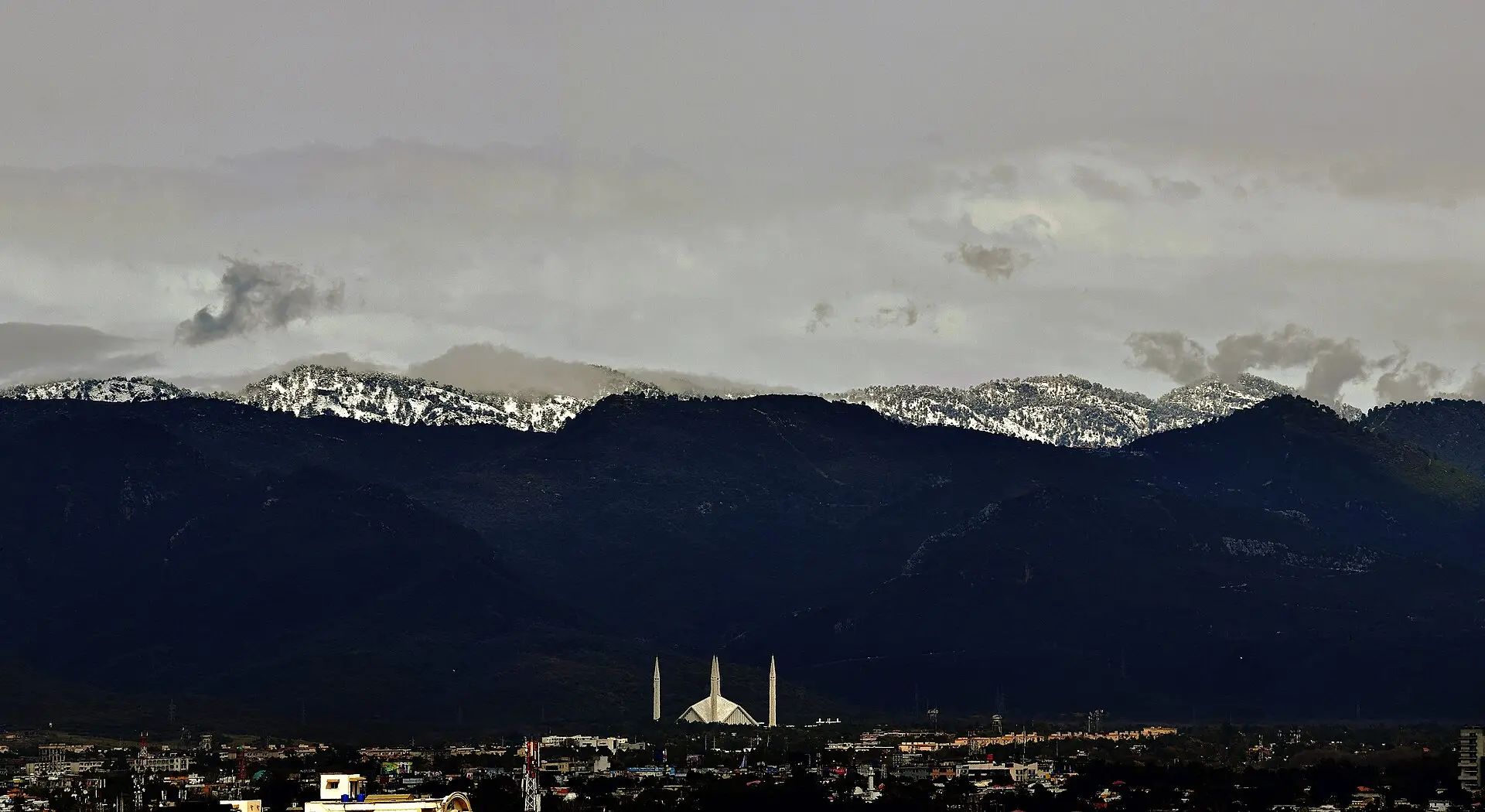 Photo: Ali Mujtaba, CC BY-SA 4.0
Islamabad has a humid subtropical climate with five fairly distinct seasons. Because the city sits at the foot of the Margalla Hills, it is greener and slightly cooler than the plains of Punjab, but summers are still very hot.
For today’s conditions and the 7-day forecast, see Islamabad weather.
The short answer
The best times to visit are October to November and March to April: warm, sunny days, cool evenings, clear views of the hills, and the best hiking.
Month by month at a glance
These are approximate long-term averages. Individual years vary, and heatwaves and cold snaps go well beyond them.
| Month | Typical day | Typical night | What it feels like |
|---|---|---|---|
| January | 17°C | 3°C | Sunny days, very cold nights, some fog |
| February | 19°C | 6°C | Cool, occasional rain, first blossom |
| March | 24°C | 11°C | Spring at its best, thunderstorms possible |
| April | 30°C | 16°C | Warm and bright, great for hiking early |
| May | 35°C | 21°C | Hot and dry |
| June | 38°C | 25°C | The hottest month, often above 40°C |
| July | 35°C | 24°C | Monsoon rain and humidity |
| August | 33°C | 24°C | Wettest weeks, lush green hills |
| September | 33°C | 21°C | Rains ease, still warm |
| October | 30°C | 14°C | Clear skies, ideal for everything |
| November | 24°C | 8°C | Crisp and sunny, festival season |
| December | 19°C | 4°C | Cool days, cold nights, smog some years |
Season by season
Winter: December to February
Days are mild and sunny, but nights are cold, often close to freezing in January. Fog and smog sometimes drift up from the plains. On a few cold days, snow dusts the higher Margalla ridges, a sight that draws photographers to Faisal Mosque. Pack a warm jacket and layers. Most homes rely on gas heaters, and gas load-shedding is common.
Spring: March to April
Probably the loveliest time of year. Trees and gardens bloom, the Rose & Jasmine Garden has its spring shows, and hiking conditions are ideal. Expect occasional thunderstorms and hail. Pollen counts are very high, especially from paper mulberry trees, and hay fever is a real problem for many residents.
Pre-monsoon summer: May to June
Hot and dry, with afternoon highs that regularly pass 40°C in June. Plan outdoor sightseeing for early morning or after sunset, drink plenty of water, and use the shade on Trail 5 if you want to hike.
Monsoon: July to August
The wettest months. Heavy downpours can arrive suddenly, cause urban flooding in low-lying areas and nullahs, and make hill roads slippery. Afternoons are humid but the hills turn a deep green. Check traffic alerts after big storms.
Autumn: September to November
After the rains, the air clears and temperatures fall. October and November are many residents’ favourite months, with sunny days, crisp evenings, and festivals such as Lok Mela.
Weather and your plans
Hiking. The Margalla trails are at their best from October to April. In summer, start at sunrise and finish before 10am. During the monsoon, streams on trails such as Trail 5 can rise quickly after heavy rain, and rocks become slippery. In very dry, hot spells, trails are sometimes closed because of forest-fire risk. Read our Margalla hiking guide and when to hike the Margallas.
Sightseeing. Faisal Mosque, Daman-e-Koh and the Pakistan Monument are best in the late afternoon and at sunset all year round. In summer, keep indoor options such as the Lok Virsa Museum for the middle of the day.
Driving. Heavy monsoon rain can flood underpasses and low roads in minutes, and winter fog can cut visibility on the motorway and the Islamabad Expressway early in the morning. Check live traffic before long drives.
Air quality. From around November to January, smog and haze from the plains sometimes reach Islamabad, especially on still, cold mornings. People with asthma or other breathing problems should watch the air-quality readings and limit hard exercise outdoors on bad days.
Allergies. Spring pollen, especially from paper mulberry trees, is a well-known problem in Islamabad from roughly March to April. If you suffer from hay fever, pack your usual medicine.
Is there snow in Islamabad?
Snow in the city itself is very rare. On a few cold winter days, however, the upper Margalla ridges can get a light dusting, which is visible from across the city. For real snow, residents drive to Murree and the Galiyat, a couple of hours away. Read more in our guide to winter in Islamabad.
What to pack
| Season | Pack |
|---|---|
| Dec–Feb | Warm jacket, sweaters, scarf |
| Mar–Apr | Light layers, an umbrella, allergy medicine |
| May–Jun | Light cotton, sun hat, sunscreen, water bottle |
| Jul–Aug | Umbrella, quick-dry clothes, sandals |
| Sep–Nov | Light layers, a jacket for evenings |
Planning a trip? Start with our list of the 20 best things to do in Islamabad.